Dear readers:
Thank you for having supported this blog.
Though I believe that the theme of "This Fading American Life" is going to continue to generate discussions and debates, I have concluded that I simple spend enough time and energy to sustain a meaningful dialogue on this platform. There are many engaging websites and blogs devoting to the landscapes of the U.S. and I hope you will continue to pay attention to this important issues - not just despair but work to change for a better future.
I will continue to write on my other blog: Matthew Felix Sun - Art · 文化 · Kunst
- a website dedicated to art scenes, including my own works and announcements.
You may also find the portal to my blogs via my website: http://www.matthewfelixsun.com/blogs/
Again, thank you and best wishes,
Matthew Felix Sun
Friday, March 23, 2012


Tuesday, February 7, 2012
Vetoes at U.N. Security Council

The Chinese and Russian's double vetoes at U.N.'s Security Councilover Syria resolution have rightly generated great indignation and anger around the world and China was forced to put forth some sort of defense over its action.
It claims, through the Chinese Communist Party's main newspapers - the People's Daily and the Global Times. They claimed that China (The People's Republic of China) had always been very careful over exercising veto right and had so far only vetoed eight times (excluding the one vetoed in 1955 by the Republic of China over new U.N. membership for Mongolia).
Above chart showed the eight vetoes it exercised (from Global Times). The People's Daily gave a detailed account of those eight vetoes.
The People's Daily openly admitted that their vetoes in 1997 over Central- and South-Americas peace efforts, 1999 over Macedonia's situation, 2008 over Africa's peace and safety (Zimbabwe) were due to those countries/regions' diplomatic relationships they maintained with Taiwan (or The Republic of China) and the vetoes were the paybacks.
In 2007, China vetoed effort to solve Burma's situation and in 2011 and 2012, China twice vetoed efforts to stop killing of civilians in Syria.

Source: Guardian.co.uk
It is obvious that China has behaved very selfishly time to time, either to revenge/blackmail over its own interest, of to protect their geopolitical friends or allies.
However, condemning such behavior should not stop with China and Russia.
The United States of America has vetoed many times, particularly over resolutions to censure its chief ally in the Mideast - Israel. Over and over, it made excuses not to pass resolution to demand Israel to stop building illegal settlement housing in the disputed land.
All members entrusted with the supreme power to veto at the U.N.'s Security Council ought to behave absolutely responsibly. Failing that, each such irresponsible vetoes ought to be condemned.
Wednesday, February 1, 2012
The Very Caring Mitt Romney
Republican presidential hopeful Mitt Romney was caught saying that he "wasn't concerned about the very poor" because there is a safety net in place for them.
During an interview with CNN, he said that "I'm not concerned about the very poor - we have a safety net there," then, added that "if it needs repair, I'll fix it."
The safety net bit definitely made Romney less a stone-hearted uncaring person as otherwise. However, his confidence on the safety net is purely self-serving.
First, our social safety net has broken for a very long time and his fellow Republicans are doing their utmost to dismantle whatever was left to serve the middle-class and poor, and the very poor. Proof lies in how the ultra-conservatives lambasted Romney for admitting the usefulness of safety net.
Second, even during the time when the safety net was largely functional, it still failed to lift up the very poor people. It did prevent them from dying from hunger en mass, but it did not help them to move up. Social mobility had generally never included the very poor in this great country called the United States of America.
What Mitt Romney and his fellow Republicans really want, is a fixed social structure, which would keep the poor in their places, which would keep them remain very poor. The very poor have little chance to become middle class in this country, and despite being squeezed hard, the middle class are still decidedly far better off then the very poor.
Mitt Romney cares for the poor very much. He would hate to see them die, but he would not lift his Midas finger to lift them up.
He would keep a window-dressing safety net and would not bother to sit down to mend it, because the net is broken and he has just forsworn whatever he had done as governor of Massachusetts, namely Healthcare Reform.
To ask the super rich to care for the very poor, is like trying to borrow fur from a raging tiger.
This reminded me a story. A beggar came to a super rich miser's house for alms. The miser's son said that he would give him a little, in 200 years time. The miser scolded his inexperienced son: "Why did you make any promise!"
The difference between Mitt Romney and the ultra-conservative is that Romney makes promises he either has no intention or/and is in no position to keep, while the ultra-conservative hate him for make a promise, however hollow.

Image source: abc.net.au
During an interview with CNN, he said that "I'm not concerned about the very poor - we have a safety net there," then, added that "if it needs repair, I'll fix it."
The safety net bit definitely made Romney less a stone-hearted uncaring person as otherwise. However, his confidence on the safety net is purely self-serving.
First, our social safety net has broken for a very long time and his fellow Republicans are doing their utmost to dismantle whatever was left to serve the middle-class and poor, and the very poor. Proof lies in how the ultra-conservatives lambasted Romney for admitting the usefulness of safety net.
Second, even during the time when the safety net was largely functional, it still failed to lift up the very poor people. It did prevent them from dying from hunger en mass, but it did not help them to move up. Social mobility had generally never included the very poor in this great country called the United States of America.
What Mitt Romney and his fellow Republicans really want, is a fixed social structure, which would keep the poor in their places, which would keep them remain very poor. The very poor have little chance to become middle class in this country, and despite being squeezed hard, the middle class are still decidedly far better off then the very poor.
Mitt Romney cares for the poor very much. He would hate to see them die, but he would not lift his Midas finger to lift them up.
He would keep a window-dressing safety net and would not bother to sit down to mend it, because the net is broken and he has just forsworn whatever he had done as governor of Massachusetts, namely Healthcare Reform.
To ask the super rich to care for the very poor, is like trying to borrow fur from a raging tiger.
This reminded me a story. A beggar came to a super rich miser's house for alms. The miser's son said that he would give him a little, in 200 years time. The miser scolded his inexperienced son: "Why did you make any promise!"
The difference between Mitt Romney and the ultra-conservative is that Romney makes promises he either has no intention or/and is in no position to keep, while the ultra-conservative hate him for make a promise, however hollow.
Image source: abc.net.au
Friday, January 27, 2012
Culture as Entertainment
Before we are inundated with explosively huge amount of information (not necessarily knowledge), people sought out culture and knowledge with the zeal our contemporaries seeking out the thrill of watching Monday Night Football. Reading "A Distant Mirror - The Calamitous 14th Century" by Barbara W. Tuchman, I encountered a paragraph describing how the Fiorentini (Florentines or Florentians) demanded lecture (entertainment as well, I suspect) from their government:
This is an amazing, heart-warming and also demoralizing episode in the human history. Though we are far better positioned in seeking out knowledge and absorbing cultural advancement, we spurn them willfully, like children refusing to eat green vegetables and insisting on artificial sugary "food".
For example, many people identify their colleges and their college life to the collegian sports, instead of academic environment and growth. College sports system is a cynical self-reinforcing mechanism designed to condition young people to care for sports with zeal and gusto, and hopefully only for sports.
This won't change and this country is hopeless unless one day, our business and political leaders start to entertain their VIP guests in museums, concert halls and libraries instead of fancy boxes in sports arenas.
Alas. I don't dare to hope.
Contemporary writers rapidly found an audience. In Dante's lifetime his verse was chanted by blacksmiths and mule-drivers; fifty years later in 1373 the growth of reading caused the Signoria of Florence, at the petition of citizens, to offer a year's course of public lectures on Dante's work for which the sum of 100 gold florins was raised to pay the lecturer, who was to speak every day except holy days. The person appointed was Boccaccio, who had written the first biography of Dante and copied out the entire Divine Comedy himself as a gift for Petrarch.
 |
| Image Source: Wikipedia [public domain image] |
For example, many people identify their colleges and their college life to the collegian sports, instead of academic environment and growth. College sports system is a cynical self-reinforcing mechanism designed to condition young people to care for sports with zeal and gusto, and hopefully only for sports.
This won't change and this country is hopeless unless one day, our business and political leaders start to entertain their VIP guests in museums, concert halls and libraries instead of fancy boxes in sports arenas.
Alas. I don't dare to hope.
Friday, January 13, 2012
Three Major Stories on Today's San Francisco Chroncle
If anyone still doubts why the greediness of corporations is killing the country, together with the capitalism they claim love so much, they only need to pay attention to the three major stories on today's San Francisco Chronicle.
Story 1: PG&E diverted safety money for profit, bonuses

Story 2: Bankrupt solar firm Solyndra eyes employee bonuses
And then we see from next story what the overseers of our economy were capable of:
Story 3:
Fed missed danger signs on eve of recession
A black Friday special?
Story 1: PG&E diverted safety money for profit, bonuses
Pacific Gas and Electric Co. diverted more than $100 million in gas safety and operations money collected from customers over a 15-year period and spent it for other purposes, including profit for stockholders and bonuses for executives, according to a pair of state-ordered reports released Thursday.
An independent audit and a staff report issued by the California Public Utilities Commission depicted a poorly led company well-heeled in its gas operations and more concerned with profit than safety.
The documents link a deficient PG&E safety culture - with its "focus on financial performance" - to the pipeline explosion in San Bruno on Sept. 9, 2010, that killed eight people and destroyed 38 homes.
The "low priority" the company gave to pipeline safety during the three years leading up to the San Bruno blast was "well outside industry practice - even during times of corporate austerity programs," said the audit by Overland Consulting of Leawood, Kan.
But PG&E wasn't hurting for cash, according to the audit. From 1999 to 2010, the company collected $430 million more from its gas-transmission and -storage operations than the revenue authorized by the California Public Utilities Commission, which sets the rates the company can charge its customers.
"PG&E chose to use the surplus revenues for general corporate purposes" rather than improved gas safety, the Overland audit said.
Story 2: Bankrupt solar firm Solyndra eyes employee bonuses
A California solar panel manufacturer that received a half-billion dollar loan from the federal government before declaring bankruptcy is asking a Delaware judge to approve up to $500,000 in employee bonuses.
A hearing on the request by Solyndra LLC of Fremont, Calif., is set later this month.
Solyndra says the performance-based incentives will help it retain key employees whose work is critical to a successful reorganization and sale of the company's assets.
The bonuses would be for up to nine equipment engineers, up to six general business and finance employees, up to four facilities workers and up to two information technology workers.
The bonuses would range from 8 percent to 38 percent of a worker's base pay. The employees in question make between $72,000 and $206,000 a year.
And then we see from next story what the overseers of our economy were capable of:
Story 3:
Fed missed danger signs on eve of recession
As the housing bubble entered its waning hours in 2006, top Federal Reserve officials marveled at the desperate antics of home builders seeking to lure buyers.
But the officials, meeting every six weeks to discuss the health of the nation's economy, gave little credence to the possibility that the faltering housing market would weigh on the broader economy, according to transcripts the Fed released Thursday. Instead, they continued to tell each other throughout 2006 that the greatest danger was inflation - the possibility that the economy would grow too fast.
"We think the fundamentals of the expansion going forward still look good," Timothy Geithner, then president of the Federal Reserve Bank of New York, told his open market committee colleagues when they gathered in Washington in December 2006.
Some officials, including Fed Governor Susan Bies, suggested that a housing downturn actually could boost the economy by redirecting money to other kinds of investments.
A black Friday special?
Tuesday, January 10, 2012
Social Order Fixation
The familiarity with a specific social order - in regardless if you like such order or not - can create some comfort, knowing that you have the confidence to navigate the life's intricate paths. The change of a fixed social order can be uncomfortable or downright terrifying.
Reading "A Distant Mirror - The Calamitous 14th Century" by Barbara W. Tuchman, I encountered a couple paragraphs describing changes of fixed social orders:
 The great financial meltdown of late exposed the falsehood of the promise that our society was a perfect world for people to move up (and presumably but not talked about, down) the social and economical ladders. Awaken from the great dream, people realized the insurmountable gap between the rich and the poor and finally, are making demands through movements like Occupy Wall Street. The movement appears confusing and messy and threatens to disrupt the familiar routines and someone, including those would benefit greatly from such pushing back, voice their doubts and displeasure, lending voices to those who opposed the movement because they are the target of the outrage.
A change of social order is scary to say the least. Sometimes, even the victims of badly constructed society mourn its demise - just remember how those poor North Korean mourned their despotic leader Kim Jong-Il.
I am afraid that human beings are born to suffer.
Reading "A Distant Mirror - The Calamitous 14th Century" by Barbara W. Tuchman, I encountered a couple paragraphs describing changes of fixed social orders:
Survivors of the plague, finding themselves neither destroyed nor improved, could discover no Divine purpose in the pain they had suffered. God's purposes were usually mysterious, but this scourge had been too terrible to be accepted without questioning. If a disaster of such magnitude, the most lethal ever known, was a mere wanton act of God or perhaps not God's work at all, then the absolutes of a fixed order were loosed from their moorings. Minds that opened to admit these questions could never again be shut. Once people envisioned the possibility of change in a fixed order, the end of an age of submission came in sight; the turn to individual conscience lay ahead. To that extent the Black Death may have been the unrecognized beginning of modern man.This description of the Black Death havoc in the 14th century, reminded me another round of human sufferings of late - the economic meltdown due to irresponsible gambling of super-rich and well-connected bankers in Wall Street and other countries. Naturally, the current human suffering did not reach the level of that brought upon by the Black Death, or even WWI. However, what happened in this round of misery did threaten to upset a social order which had been in fixation for at least last sixty years - capitalism.
Meantime it left apprehension, tension, and gloom.It accelerated the commutation of labor services on the land and in so doing unfastened old ties. It deepened antagonism between rich and poor and raised the level of human hostility. An event of great agony is bearable only in the belief that it will bring about a better world. When it does not, as in the aftermath of another vast calamity in 1914-18, disillusion is deep and moves on to self-doubt and self-disgust. In creating a climate for pessimism, the Black Death was the equivalent of the First World War, although it took fifty years for the psychological effects to develop.
 The great financial meltdown of late exposed the falsehood of the promise that our society was a perfect world for people to move up (and presumably but not talked about, down) the social and economical ladders. Awaken from the great dream, people realized the insurmountable gap between the rich and the poor and finally, are making demands through movements like Occupy Wall Street. The movement appears confusing and messy and threatens to disrupt the familiar routines and someone, including those would benefit greatly from such pushing back, voice their doubts and displeasure, lending voices to those who opposed the movement because they are the target of the outrage.
A change of social order is scary to say the least. Sometimes, even the victims of badly constructed society mourn its demise - just remember how those poor North Korean mourned their despotic leader Kim Jong-Il.
I am afraid that human beings are born to suffer.
Wednesday, November 30, 2011
Students vs. Regents of University of California
The University of California's governing Regents' meeting this Monday was interrupted by protesting students against ever rising tuition and fees.
The SFGate.com reported that
It is understandable that UC's administrators were just as frustrated and upset as the student when the State has failed them repeatedly.
However, UC Regent's plea for the students to protest at the door step of the state legislators instead of their schools sounded rather like shrugging their collective shoulders.
The students live and study around their campuses and they should have the right to speak out and protest in their home turf. It was the Regents who imposed the fee and tuition hikes, and they have the right to protest against the Regents.
In turn, if the Regents feel the urgency and the pain the students are suffering from, they ought to camping out in Sacramento themselves, and demand tax increase from the super rich, the rich and even the middle class to support our once great educational systems in California. Our Regents ought to occupy Sacramento themselves.
Perhaps, Wachspress hit the nail on the head. If our Regents could or would not fight to solve the problems, then they are part of the problems. Then they ought to be replaced.

The SFGate.com reported that
Hundreds of students and faculty members chanted and shouted so loudly at a number of UC Board of Regents meetings Monday that the university officials had to move to different rooms to take up their business, including voting to ask the state for millions of dollars in new funding.
UC Berkeley social policy graduate student Megan Wachspress, 27, said the regents are part of the problem.
"We need to find a new way to pick regents," she said at the Mission Bay campus. "So many of them have conflicts of interest. They're on the boards of corporations. They belong to groups that oppose tax increases, and they keep raising the pay for top administrators."
Lawmakers have cut hundreds of millions of dollars from UC's state allocation over the past few years, including $650 million this year alone. Another $100 million could be cut this winter if state revenues fall short as expected.
At the same time, the regents have raised tuition and fees annually since 2006, when they totaled $8,323. Tuition and fees this year amount to $13,218.
UC President Mark Yudof said afterward in San Francisco that he sympathized with the protesters' plight.
"I wish they wouldn't interrupt a public meeting," he said, but added "the students have taken it on the chin for the past decade ... I definitely understand the students' position."
However, he and several regents said - reiterating what they have said before - students should direct their efforts to restore funding to higher education at state leadership in Sacramento rather than at UC's administrators.
It is understandable that UC's administrators were just as frustrated and upset as the student when the State has failed them repeatedly.
However, UC Regent's plea for the students to protest at the door step of the state legislators instead of their schools sounded rather like shrugging their collective shoulders.
The students live and study around their campuses and they should have the right to speak out and protest in their home turf. It was the Regents who imposed the fee and tuition hikes, and they have the right to protest against the Regents.
In turn, if the Regents feel the urgency and the pain the students are suffering from, they ought to camping out in Sacramento themselves, and demand tax increase from the super rich, the rich and even the middle class to support our once great educational systems in California. Our Regents ought to occupy Sacramento themselves.
Perhaps, Wachspress hit the nail on the head. If our Regents could or would not fight to solve the problems, then they are part of the problems. Then they ought to be replaced.
Tuesday, November 22, 2011
Military Budget Cuts
 |
| President Obama makes a statement at the White House afterthe congressional debt supercommittee failed to reachan agreement. Photograph: Pablo Martinez Monsivais/AP- via Guardian.co.uk |
With the cuts looming, guess what, the Republicans are trying to take that cut out of the whole deal and President Obama has voiced his strong opposition.
If the Republicans are so concerned with the military budget cuts, they could have prevented it by compromise on tax increases in the "Super Committee". Failing that, if they really want to prevent the military budget cut, they can try to negotiate with tax increases to offset all those agreed upon military budget cuts.
After all, our nation's huge military spending, is largely to protect the commercial interests of large corporations and the super-rich. The Republicans love to lecture people that there is no free lunch. Suck it up then!
Monday, November 21, 2011
Linda Katehi (UC Davis Chancellor) and Administrative Costs at Public Universities
The police's dosing of pepper spray over peaceful protesting students last week had called attention once again to the chancellor of University of California, Davis (UC Davis), Linda Katehi, with many calls for her resignation from students, faculty and staff and alumni and others.
According to UC Davis's web site, that Chancellor Katehi, was hired in 2009.
Considering the protest on UC Davis, inspired by the Occupy Wall Street movement, was a rallying cry against greedy individuals and their enablers, and the institutions behind them, asserting the rights to an affordable good education, and taking back our country, our state and our public university, it is very pertinent that Chancellor Katehi be replaced by a dedicated, highly qualified administrator, who would not demand such an exorbitant salary. Claiming it is impossible to find such candidate is not good enough.
University of California's present and regents must act.
Police pepper spraying and arresting students at UC Davis
According to UC Davis's web site, that Chancellor Katehi, was hired in 2009.
As chancellor of UC Davis, Katehi will receive an annual salary of $400,000. This is a 12.4 percent increase above her current salary of $356,000 at the University of Illinois. Vanderhoef currently earns $315,000 as UC Davis chancellor.Her $400,000 annual salary, approved by the UC Board of Regents, equated to a 27 percent hike from her predecessor and a 12.4 percent increase from her previous position at the University of Illinois. That happened during the time when the funding to the University from the state had been cut year after year, after staff and faculty were forced to take unpaid furloughs, and endless tuition hikes threatened the quality of the university system. It was an obscene amount of money thrown at a civil servant, a public university administrator.
UC seeks to be competitive in the employment markets relevant to its faculty and staff hires, and the base salary of $400,000 is still substantially below the 2008 median of $628,000 among chancellors at UC’s comparison group of 14 public and private U.S. campuses with medical schools.
Considering the protest on UC Davis, inspired by the Occupy Wall Street movement, was a rallying cry against greedy individuals and their enablers, and the institutions behind them, asserting the rights to an affordable good education, and taking back our country, our state and our public university, it is very pertinent that Chancellor Katehi be replaced by a dedicated, highly qualified administrator, who would not demand such an exorbitant salary. Claiming it is impossible to find such candidate is not good enough.
University of California's present and regents must act.
Police pepper spraying and arresting students at UC Davis
Thursday, November 10, 2011
Failure of American Universities - Thoughts on Penn State Riots and Novel "The Reluctant Fundamentalist"
Following up the disclosure of the horrendous sexual scandal and crime of the assistant coach Jerry Sandusky, who preyed on young boys, and the covering up of such crime by the officials and football coach Joe Paterno, considered a legendary figure and hugely bankable figure, generated a more shocking scandal. This time, the actors were the supposedly bright young men and women who were studying at Penn State University.
SFGate.com reported that
Penn State students chant support for fired coach Hundreds of Penn State students have taken to the streets to chant their support for ousted football coach Joe Paterno.The utterly disregard of the victims and human decency, and the mass hysteria of "hero" worshiping demonstrated in the YouTube videos below were truly disgusting and disturbing. They were supposed to be the best of their generation and should have the soundest judgement and compassion. But, it seems to me, that they had only their bloated egos and misplaced love. What they lacked were just brown shirts to generate more shudders.
The students flooded downtown State College on Wednesday night after Paterno and university President Graham Spanier were fired amid a growing furor linked to their handling of sex abuse allegations against a former assistant football coach.
The students gathered about two blocks from the campus, with some chanting "We want Joe! We want Joe!" Some shook a lamp post and others tipped over a news van, kicking out its windows.
Below is the detailed background story of the sex abuse allegations, reported by SFGate:
Penn State trustees fired football coach Joe Paterno and university president Graham Spanier amid the growing furor over how the school handled sex abuse allegations against an assistant coach.While searching for the YouTube videos above, I came across another riot of the very same Penn State University, this time, celebrating the killing of Osama Ben Ladin:
The massive shakeup Wednesday night came hours after Paterno announced that he planned to retire at the end of his 46th season.
But the outcry following the arrest of former assistant coach Jerry Sandusky on molestation charges proved too much for the board to ignore.
One key question has been why Paterno and other top school officials didn't go to police in 2002 after being told a graduate assistant saw Sandusky assaulting a boy in a school shower.
Paterno says he should have done more. Spanier has said he was not told the details of the attack.
Sandusky has denied the charges. Defensive coordinator Tom Bradley will serve as interim coach while Rodney Erickson will serve as interim school president.
 |
| Image Source: Wikipedia |
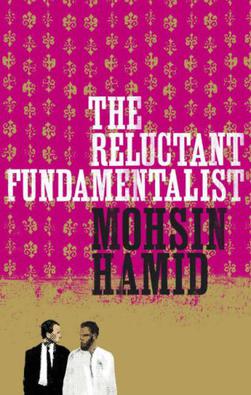
The kind of celebration was described in the award winning novel "The Reluctant Fundamentalist", which my friends and I happened to discuss last night at our book club.
The book described "a bearded Pakistani man called Changez (the Urdu name for Genghis) tells a nervous American stranger about his love affair with an American woman, and his eventual abandonment of America." [Wikipedia]
The narrator (Changez) described that he, a Princeton graduate, smiled when he saw the image of airplane plunging into World Trade Center. That smile was as damning to the lack of humanity in certain people, mirrored painfully in the riots occurred in Penn State University and other places, and to the failure of American educational system, particularly the universities and graduate schools.
In the past, universities trained scholars immersed in classical humanism, even if the major of the students were in science or engineering and it was no accident that the advanced degrees in those fields were called Doctors of Philosophy.
It is utterly different now. Universities concentrate on churning our job seekers and the graduates were useful tools and parts in well-oiled economic machines. Universities and especially graduate schools instilled little, if not none, of the humanism so prized before.
Facing the fact that American students are fleeing from science and engineering fields, and being replaced by waves after waves of foreign students who had little understanding of western tradition and philosophy, we are get a very bad bargain. We train skilled technocrats who can remain totally alien or hostile to the foundation of our cultural foundation.
Look at those many despotic rulers in Mideast, Africa and Asia. How many of them were western "trained"? Trained, but hardly educated.
Failing to truly educate the cream of the new generation, US or foreign born, is the greatest failure of our educational system.
Saturday, October 29, 2011
Occupy Wall Street and Super Committee
There are many charges against the movement of "Occupy Wall Street" and one of the major one is that the movement lacks a clear and executable agenda.
Due to the democratic nature the movement, it is inevitable that there have been many ideas floating about without a central core but it is indeed high time for ideas and organizations to congeal and make a clear, reasonable and executable demand.
As this nation is in a crucial juncture, it is disheartening to see that President Obama once again, sits on his hands, and let the so called congressional super committee to come up of a scheme to cut the deficit and put it for a vote in the congress; and if the plan failed to pass, an automatic drastic budgetary cut would be enforced. How brilliant this idea is. Since the result of failing to pass any plan the "Super Committee" might put forth is a large budget cut, the Republicans - who have been calling to starve the beast (government) for decades - have all the incentives not to pass any plan.
Since the ill conceived and all powerful "Super Committee" is to dictate the direction of the nation for a long time to come, it is vital for the "Occupy Wall Street" to demand to scrap such "Super Committee". I call it "ill conceived" because it didn't demand an automatic tax increase on certain group (along side with some large budgetary cuts), therefore creating a balanced incentives for both leading political parties to reach an agreement.
Without that threat of automatic tax increases, it is a good bet that the consequence of any plan from such "Super Committee", or the failure to pass such plan, would only exacerbate the bottom 90% or 99% of the population, meanwhile protecting those on top, sitting on piles of gold and refusing to lift a finger to help the underprivileged and the nation they claim that they love, and the nation has done so much for them - deregulation and tax cuts after tax cuts and still more to come.
To replace such an ill-conceived super committee, the movement of Occupy Wall Street ought to demand a new committee, seating people from all economic spectrum, in proportion to the demographics, so as to come up with a plan to reduce deficit and correct the income inequality, and then put the plan to a national referendum, instead of a congressional horse trading.
President Obama, it's high time for you to lead and please lend your support to Occupy Wall Street.

Note: Below is National Public Radio (NPR)'s summary of the Super Committee:
Due to the democratic nature the movement, it is inevitable that there have been many ideas floating about without a central core but it is indeed high time for ideas and organizations to congeal and make a clear, reasonable and executable demand.
As this nation is in a crucial juncture, it is disheartening to see that President Obama once again, sits on his hands, and let the so called congressional super committee to come up of a scheme to cut the deficit and put it for a vote in the congress; and if the plan failed to pass, an automatic drastic budgetary cut would be enforced. How brilliant this idea is. Since the result of failing to pass any plan the "Super Committee" might put forth is a large budget cut, the Republicans - who have been calling to starve the beast (government) for decades - have all the incentives not to pass any plan.
Since the ill conceived and all powerful "Super Committee" is to dictate the direction of the nation for a long time to come, it is vital for the "Occupy Wall Street" to demand to scrap such "Super Committee". I call it "ill conceived" because it didn't demand an automatic tax increase on certain group (along side with some large budgetary cuts), therefore creating a balanced incentives for both leading political parties to reach an agreement.
Without that threat of automatic tax increases, it is a good bet that the consequence of any plan from such "Super Committee", or the failure to pass such plan, would only exacerbate the bottom 90% or 99% of the population, meanwhile protecting those on top, sitting on piles of gold and refusing to lift a finger to help the underprivileged and the nation they claim that they love, and the nation has done so much for them - deregulation and tax cuts after tax cuts and still more to come.
To replace such an ill-conceived super committee, the movement of Occupy Wall Street ought to demand a new committee, seating people from all economic spectrum, in proportion to the demographics, so as to come up with a plan to reduce deficit and correct the income inequality, and then put the plan to a national referendum, instead of a congressional horse trading.
President Obama, it's high time for you to lead and please lend your support to Occupy Wall Street.
Domesticity © Matthew Felix Sun
Note: Below is National Public Radio (NPR)'s summary of the Super Committee:
How Super Is The Deficit-Cutting Committee? Twelve lawmakers. More than $1 trillion to shave off the deficit. One Thanksgiving deadline. Can they do it?
The debt-ceiling deal struck this summer created a panel of six Republicans and six Democrats — dubbed the "supercommittee" — to find ways to reduce the deficit. If they can't, "sequestration" — a slew of automatic spending cuts — kicks in. While there are high hopes in Washington for the committee's success, skeptics have trouble seeing how the chosen lawmakers will navigate around the main sticking points: Democrats seem set on protecting Medicare and Medicaid and see increasing revenues as essential. Republicans would prefer to lower taxes if anything and want to make cuts to the big entitlement programs.
Sunday, October 16, 2011
Occupying Wall Street and Tiananmen Square
The movement of "Occupying Wall Street" reminded me a lot of the Tiananmen Square in Beijing in 1989.
There were many similarities and differences. Since I was in college then, and participated the sit-in for about 24 hours in late May that year, I have personal memory to abet my analysis below.
First, let's see the still developing and forming movement of the "Occupying Wall Street". According to occupywallst.org, the de facto online resource for the ongoing protests happening on Wall Street,
The current unemployment rate is really high and it is much higher amongst the young people. The unemployed, in general, are not to be blamed for their conditions. It was the greedy Wall Street bankers, recklessly drove the nation and the world to the brink of collapse, aided again and again by the political establishments from both parties and bailed out by the government who labeled them "too big to [allow] fail".
In 1989, when Chinese students hit the streets and occupied Tiananmen Square in Beijing, they were motivated by both a demand for better economic future for themselves, and an open, democratic system which would reverse the economic foe they were facing upon graduation. Since late 1980s, the income amongst intellectuals in China was seriously behind labors and the resentments amongst college students were extremely high, since they were confronted with the reality that their salaries would be much lower than their allowances their parents gave them while in colleges. Just like here, it was the political structure created such unstable and unacceptable situation for people, therefore the youths rebelled.
Thus the similarity.
There is a major difference. In 1989, the student movement had a clear leadership circle, who made many concrete demands which could be implemented, amongst the general calls for democracy, while OWS seems somewhat headless and made no concrete demands.
The reason behind this major different is that China had a highly centralized government and major decisions were made by a handful of people; while the U.S. is a decentralized government with several branches and levels, and no domineering political forces which can dictate an immediate change. Therefore, the tactics the OWS people has adopted, namely building a movement, not dissimilar to the Tea Party movement, is more appropriate. It would grow, once more and more people hear their voices and realized that they were indeed also belong to that disenfranchised 99% (or 90%, argued by Krugman), and eventually, some sympathetic but timid, or opportunistic politicians.
This is not a class war declared on the wealthy or the act of jealous. Just as in 1989, the Chinese students had no intention to overthrow the government, but to redress the wrongs in the hands of the lopsided policies and the political structures allowed no voices from them to be heard.
Rather, OWS people are pointing out the failure of the laissez-faire capitalism and the illusion of all people got rich with the wealth trickles down from the top. In the pass, masked by the rising housing prices and the easy credits, majority of middle classes or even lower classes felt they had indeed drunk on the trickled down spring water. After the economic crisis, some of them finally realized that they had not been drinking any vintage but bitter pomace juice. What OWS people are trying to do, is to waken the rest up and see clearly the inequality and unfairness guaranteed by this failed and failing laissez-faire capitalism and its lackey - the main political parties, the politicians and the officials, up to current supreme court.
Some super rich people still jeer at the OWS protesters. They claimed that what they demand is the failed socialism. Well? No system or ism is fault free and since the laissez-faire capitalism is ailing severely, people should not be deterred by labels from explore good ideas from other forms of government.
In the U.S., it is one dollar one vote now. The middle class and the poor have ever diminishing voices. The political apparatuses are closed to them. Even President Obama was not willing or able to change the situation. I'd say unwilling.
The disenfranchised people's anger is pointing at as much Wall Streets as its enablers. When Obama claimed that those banking institution who brought the nation to its knees by their reckless gaming as "too big to [allow] fail", he instantaneously became their partner in crime. His omitting the word "allow", disingenuously covered up the fact that it was the governmental decision to bail these institutions up at the expenses of the middle class and the poor, to pump blood into them to keep them alive and continue to exploit and to speculate, and hide the fact that the government could have demand more oversight of these speculators and more regulations to prevent the repeat.
People have no place to go but the street. One only wonders what takes it so long and if the politician would heed their voices and try to correct the wrongs.

Occupy Wall Street protesters take part in a demonstration at Times Square in New York. Photograph: Eduardo Munoz/Reuters
There were many similarities and differences. Since I was in college then, and participated the sit-in for about 24 hours in late May that year, I have personal memory to abet my analysis below.
First, let's see the still developing and forming movement of the "Occupying Wall Street". According to occupywallst.org, the de facto online resource for the ongoing protests happening on Wall Street,
Occupy Wall Street is a horizontally organized resistance movement employing the revolutionary Arab Spring tactic to restore democracy in America. We use a tool known as a "people's assembly" to facilitate collective decision making in an open, participatory and non-binding manner. We call ours the NYC General Assembly and we welcome people from all colors, genders and beliefs to attend our daily assemblies.It is fair to say, that the economic woes, amongst the young people in particular, were the immediate triggers behind the "Arab Spring" and "Occupying Wall Street" (OWS), either one blame this condition on ruthless despots in Mideast, or greedy bankers sucking blood on the nation and the middle class and the poor in the US, aided by political structures to maintain the status quo profitable for a handful few - perhaps not just the top 1%, as argued by economist Paul Krugman.
The current unemployment rate is really high and it is much higher amongst the young people. The unemployed, in general, are not to be blamed for their conditions. It was the greedy Wall Street bankers, recklessly drove the nation and the world to the brink of collapse, aided again and again by the political establishments from both parties and bailed out by the government who labeled them "too big to [allow] fail".
In 1989, when Chinese students hit the streets and occupied Tiananmen Square in Beijing, they were motivated by both a demand for better economic future for themselves, and an open, democratic system which would reverse the economic foe they were facing upon graduation. Since late 1980s, the income amongst intellectuals in China was seriously behind labors and the resentments amongst college students were extremely high, since they were confronted with the reality that their salaries would be much lower than their allowances their parents gave them while in colleges. Just like here, it was the political structure created such unstable and unacceptable situation for people, therefore the youths rebelled.
Thus the similarity.
There is a major difference. In 1989, the student movement had a clear leadership circle, who made many concrete demands which could be implemented, amongst the general calls for democracy, while OWS seems somewhat headless and made no concrete demands.
The reason behind this major different is that China had a highly centralized government and major decisions were made by a handful of people; while the U.S. is a decentralized government with several branches and levels, and no domineering political forces which can dictate an immediate change. Therefore, the tactics the OWS people has adopted, namely building a movement, not dissimilar to the Tea Party movement, is more appropriate. It would grow, once more and more people hear their voices and realized that they were indeed also belong to that disenfranchised 99% (or 90%, argued by Krugman), and eventually, some sympathetic but timid, or opportunistic politicians.
This is not a class war declared on the wealthy or the act of jealous. Just as in 1989, the Chinese students had no intention to overthrow the government, but to redress the wrongs in the hands of the lopsided policies and the political structures allowed no voices from them to be heard.
Rather, OWS people are pointing out the failure of the laissez-faire capitalism and the illusion of all people got rich with the wealth trickles down from the top. In the pass, masked by the rising housing prices and the easy credits, majority of middle classes or even lower classes felt they had indeed drunk on the trickled down spring water. After the economic crisis, some of them finally realized that they had not been drinking any vintage but bitter pomace juice. What OWS people are trying to do, is to waken the rest up and see clearly the inequality and unfairness guaranteed by this failed and failing laissez-faire capitalism and its lackey - the main political parties, the politicians and the officials, up to current supreme court.
Some super rich people still jeer at the OWS protesters. They claimed that what they demand is the failed socialism. Well? No system or ism is fault free and since the laissez-faire capitalism is ailing severely, people should not be deterred by labels from explore good ideas from other forms of government.
In the U.S., it is one dollar one vote now. The middle class and the poor have ever diminishing voices. The political apparatuses are closed to them. Even President Obama was not willing or able to change the situation. I'd say unwilling.
The disenfranchised people's anger is pointing at as much Wall Streets as its enablers. When Obama claimed that those banking institution who brought the nation to its knees by their reckless gaming as "too big to [allow] fail", he instantaneously became their partner in crime. His omitting the word "allow", disingenuously covered up the fact that it was the governmental decision to bail these institutions up at the expenses of the middle class and the poor, to pump blood into them to keep them alive and continue to exploit and to speculate, and hide the fact that the government could have demand more oversight of these speculators and more regulations to prevent the repeat.
People have no place to go but the street. One only wonders what takes it so long and if the politician would heed their voices and try to correct the wrongs.
Occupy Wall Street protesters take part in a demonstration at Times Square in New York. Photograph: Eduardo Munoz/Reuters
Wednesday, October 5, 2011
Learning From China
The so called "war on terror" is entering a new stark chapter.
According to San Francisco Chronicle's report,
President Barack Obama steered the nation's war machine into uncharted territory Friday when a U.S. drone attacked a convoy in Yemen and killed two American citizens who had become central figures in al-Qaida.
It was believed to be the first instance in which a U.S. citizen was tracked and executed based on secret intelligence and the president's say-so. And it raised major questions about the limitations of presidential power.
Anwar al-Awlaki, the target of the U.S. drone attack, was one of the best-known al-Qaida figures after Osama bin Laden. American intelligence officials had linked him to two nearly catastrophic attacks on U.S.-bound planes, an airliner on Christmas 2009 and cargo planes last year. The second American killed in the drone attack, Samir Kahn, was the editor of Inspire, a slick online magazine aimed at al-Qaida sympathizers in the West.
...
"Anwar al-Awlaki is acting as a regional commander for al Qaeda in the Arabian Peninsula," White House spokesman Robert Gibbs told reporters in August 2010.
What if the U.S. was wrong, Gibbs was asked, what recourse does a citizen have to save himself? The CIA had misidentified and imprisoned the wrong person before. Gibbs sidestepped the question.
The U.S. has been inconsistent in how it describes al-Awlaki. The Treasury Department called him a leader of al-Qaida in Yemen. FBI Director Robert Mueller called him the leader. On Friday, Obama called him "the leader of external operations," the first time he has been described that way.
When word leaked out that al-Awlaki's name was on the list, his family rushed to court to try to stop the government from killing him, saying he had to be afforded the constitutional right to due process.
The idea of killing an American citizen provided critics with fodder for all sorts of comparisons showing the peculiarities of national security law and policy. The government could not listen to al-Awlaki's phone calls without a judge's approval, for instance, but could kill him on the president's say-so. The Obama administration opposed imprisoning terrorist suspects without due process but supported killing them without due process.
"If the Constitution means anything, it surely means that the president does not have unreviewable authority to summarily execute any American whom he concludes is an enemy of the state," ACLU lawyer Ben Wizner said Friday.
Indeed, one of the duty of the president is to protect and ensure due process for US citizens. If according to his own judgement, he could have a US citizen killed, without explicit legal authorization, he is on shaky ground.
In order to be more responsible, the US would do better by learning from China.
After the international outcry against Chinese's secrete detention of high profile artist Ai Weiwei and the like, China now is proposing to overhaul the criminal penal codes, to legalize the secrete arrest and detention and disappearnces.
US and China have more similarities than most people think and we can be more like China, only if we keep pace with them.

Pink and Gray Landscape © Matthew Felix Sun
Monday, September 19, 2011
Class Warfare, You Betcha!
When President Obama called on the super rich to share the economic pain our nation and the people are suffering from, he is duly accused by his Republican opponents as staging a class warfare.
President Obama sparred back against such charge and claimed that what he proposed, upper-income tax hike, was simply not a class warfare. Obama threw his darts rather aimlessly, saying:
Why afraid of the word "class warfare"? Why deny it?
Not class warfare? I would say, it is indeed class warfare, a warfare has been waging for decades by the rich against the poor. What Obama is trying to do, is simply to reverse the trend, to protect the feeble. Why would he shy away from using the word? He really should have staged a counter charge, head on.
Whatever the Republicans want to do, is the tried and tired means of more corporate tax cuts, and more deregulation - they are perhaps good for profit, for the balance sheets, but again and again, they have been proven bad for the people and the country.
Let's call spade spade. Whatever the Republicans plan to do, is to rob the poor even further, to squeeze the middle further, so as to have a even bigger share of the national wealth. The low and middle-class have suffered long enough under the yoke of the corporations, and their political henchmen, and we should not allow ourselves to sacrifice more in order to ensure the continued growth of the corporations, which have completely severed themselves from the quality of ordinary people's life. We want to have a fair share of the wealth.
We don't want to stage a class warfare. However, it is it brought to our door step, we'll fight back.
This is what Obama should have said. Would he ever be our true champion?

You’re already hearing the moans and groans from the other side about how we are engaging in class warfare and we’re being too populist and this and that and the other — all the usual scripts. I mean, it’s predictable, the news releases that come out from the other side. But the truth of the matter is, is that if we don’t succeed, then I think that this country is going to go down a very perilous path. And it’s not going to be good for those of us who have done incredibly well in this society and it’s certainly not going to be good for the single mom who’s working two shifts right now trying to support her family. It’s not going to be good for anybody.I agree with Obama's goal and means, but again, I don't think he fought back with enough strength.
Why afraid of the word "class warfare"? Why deny it?
Not class warfare? I would say, it is indeed class warfare, a warfare has been waging for decades by the rich against the poor. What Obama is trying to do, is simply to reverse the trend, to protect the feeble. Why would he shy away from using the word? He really should have staged a counter charge, head on.
Whatever the Republicans want to do, is the tried and tired means of more corporate tax cuts, and more deregulation - they are perhaps good for profit, for the balance sheets, but again and again, they have been proven bad for the people and the country.
Let's call spade spade. Whatever the Republicans plan to do, is to rob the poor even further, to squeeze the middle further, so as to have a even bigger share of the national wealth. The low and middle-class have suffered long enough under the yoke of the corporations, and their political henchmen, and we should not allow ourselves to sacrifice more in order to ensure the continued growth of the corporations, which have completely severed themselves from the quality of ordinary people's life. We want to have a fair share of the wealth.
We don't want to stage a class warfare. However, it is it brought to our door step, we'll fight back.
This is what Obama should have said. Would he ever be our true champion?
Thorned Flowers © Matthew Felix Sun
Wednesday, September 14, 2011
Remaking Mitt Romney, à la John McCain
Republican presidential candidate, former Governor of Massachusetts, Mitt Romney, has been remaking himself ever since he entered the race in last cycle when he lost to John McCain, who was nominated and lost big in the general election.
Incredibly, Mitt Romney has stuck to his tried and failed scripts, with some borrowed pages from now disgraced John McCain.
Mitt Romney is remaking himself in John McCain's mode in all earnest and that will prove his undoing and make him as a tragic figure as McCain.
Like John McCain, Romney chooses to present himself as somebody else, meanwhile studiously disown his sizable political achievement, McCain as senator with independent streak, and Romney, a governor who helped to usher in universal health care in the Commonwealth of Massachusetts. The day they disowned their own achievement and characters, they became nobody and completely phony. Lacking authenticity was one of the major defects Romney has and his silly posturing only exacerbates it.
John McCain, during his pandering to the far right, who always disliked him, lost his friend in the middle and the left, together with his integrity and human dignity.
Mitt Romney, a respected politician, instead of running on the record of his political achievement, determined to run as a business leader, in the climate that big business prospers while middle class and labors suffer. It has never been so clear that business interests are independent and often not correlated to the main street. Therefore, Romney might just runs over the precipice - even if he prevails in the primary, his selling out of his integrity will catch up with him and he will regret, as bitterly as John McCain, on the election day.
Governing is an art; it's not business. I would not hesitate to choose a career politician over a business person, who only sees profit and balance sheet, while oblivious to the people who might be affected by their profit-driven decisions. Business leaders do not have in their minds the average American's interests.
Let's not delude ourselves.

Incredibly, Mitt Romney has stuck to his tried and failed scripts, with some borrowed pages from now disgraced John McCain.
Mitt Romney is remaking himself in John McCain's mode in all earnest and that will prove his undoing and make him as a tragic figure as McCain.
Like John McCain, Romney chooses to present himself as somebody else, meanwhile studiously disown his sizable political achievement, McCain as senator with independent streak, and Romney, a governor who helped to usher in universal health care in the Commonwealth of Massachusetts. The day they disowned their own achievement and characters, they became nobody and completely phony. Lacking authenticity was one of the major defects Romney has and his silly posturing only exacerbates it.
John McCain, during his pandering to the far right, who always disliked him, lost his friend in the middle and the left, together with his integrity and human dignity.
Mitt Romney, a respected politician, instead of running on the record of his political achievement, determined to run as a business leader, in the climate that big business prospers while middle class and labors suffer. It has never been so clear that business interests are independent and often not correlated to the main street. Therefore, Romney might just runs over the precipice - even if he prevails in the primary, his selling out of his integrity will catch up with him and he will regret, as bitterly as John McCain, on the election day.
Governing is an art; it's not business. I would not hesitate to choose a career politician over a business person, who only sees profit and balance sheet, while oblivious to the people who might be affected by their profit-driven decisions. Business leaders do not have in their minds the average American's interests.
Let's not delude ourselves.
Colony © Matthew Felix Sun
Thursday, September 8, 2011
A Wasted Opportunity - on San Francisco Opera's New Commission "Heart of A Soldier"
Wasted opportunity? No, I'm not talking about Obama's lackluster presidency which failed to solve so many pressing problems our nation faces, though it surely warrants such description. No, I'm talking about San Francisco Opera's new commission, "Heart of a Soldier", an opera with libretto by Donna di Novelli and music by Christopher Theofanidis, and was based on James Stewart's book of the true story of Rick Rescorla. The opera is scheduled to be premiered on the eve of the 10th anniversary of the September 11th attacks on the World Trade Center, New York City, in 2001. It is to be staged by Francesca Zambello, who just triumphantly staged Wagner's Ring Cycle for SFOpera, the instigator of this whole project, when she read the book, she immediately saw it as opera material.
Ten years after the attack on World Trade Center, it is high time for remembrance, reflection and some deep thinking. It is also a high time for an operative treatment of a story regarding the September 11 attack. I was hoping for an opera in somber tone, with ample respect for the deceased and the bereaved, with collective reflection on the events lead to the fatal day and the aftermath, with a clear-eyed hope for a better future. We need a 9/11 opera.
However, the creative team of the opera steadfastly denied that it would be a 9/11 opera, instead, they emphasized that it would be an opera about love - the camaraderie love between protagonist Rick Rescorla, whose military experience prepared him to save thousands people's life in his company, and his life-long friend Dan Hill, and a late-found love between Rick and his wife Susan. The love between Rick and Susan, as poignant as it was, did nothing to propel the story line - their love contributed nothing to the final denouement and it is puzzling to see that this love becomes the focus of this opera.
What this opera's about? It seems to me about a hero's path. The opera included many flashing points, such as Rick met American soldiers in his British hometown as a boy, his killing a lion to prove his bravado, his stunt in Vietnam in order to fight the Communists and his career as security chief for financial firm in New York City.
The real drama lies in his early design to kill communists and the doubt later crept in while in Vietnam. The synopsis mentioned the motive for Rescorla and Hill to go to Vietnam is their desire to seek a just war. Had they found it? Was the war just? How shaken were they by their doubts? In the same vein, did people ask why the Jihadists attacked our civilians? Did they see it as just? What about other Muslim people who might bear grudge but would not pick up weapons to kill randomly?
The parallel between the desire to kill communists and modern day Jihadism is also a very interesting topic. Did we fail or refuse to see other groups, defined by different forms of government, different religions, or different ideology, as human beings, just as the modern day Jihadists do? Grown up in communism China, when I read the line of "fight the Communists", I inevitably thinking about my father, who was a career civil servant and joined the Party in high school, or my mother, an expert doctor, who struggled entire career to be admitted into the Party to prove her worth, or my sister, who had to join the Party in order to be promoted into a managerial position in a newspaper. Are these career soldiers the people only happy to kill? What about the aftermath? How we handled the suspects we rounded up in Afghanistan and Iraq? Perhaps it was not touched upon by the libretto because it is too close for comfort.
All these moral dilemmas and arguments would have made a compelling and thought-provoking opera. But all these were seriously under-developed or consciously avoided. Since the libretto shied away from all these aspects, all the possible depths and nuances are lost due to this avoidance. Apparently, the creative team didn't want to create another controversial opera like John Adam's The Death of Klinghoffer.
One genuinely interesting part included in the opera was Dan Hill's conversion to Muslim and his moving to Afghanistan, but that thread did not go further either. Therefore, the opera becomes episodic, meandering and skin deep. It is heart-tugging in a tear-jerking way.
As for the music, the argument from San Francisco Opera's general director David Gockley yields no comfort. Opera News magazine quoted that he wanted a legitimate composer, one with "a big emotional sweep, who's not afraid to write a popular melody but still can deal with a big arc and complexity and breadth."

Rehearsal photo from San Francisco Opera
Instead of an opera with fitting gravitas à la Stravinsky's Oedipus rex, we will get a technicolor Lawrence of Arabia. Very sweeping.
Moving beyond an opera commission. Let's see if we have learned much. How have we grown up? Have we used the pivotal moment in history the tragedy brought to the world to heal the wounds of humanity?
Unfortunately, not much.
We have not done enough to deal with social and economical injustice in the world; we have employed cruel methods against our opponents, or just suspects, in order to protect our freedom, mostly the "god-given right" to consume as cheaply as we can, at other people's expenses.
However, there is glimmer of hope. What the Western power had done to support Libyan people's cause, while allowing them to own their own revolution, struck the right balance.
However, we know better than trusting too much on hope. We live in a complex, confusing and perilous world. Let's hope that there will not be a double dip - a reign by maniacal, egocentric and intolerant Republican reign, particularly of Texan brand.
Related articles:
--> Not Enough Drama, Love to Rescue - on San Francisco Opera's Commissions "Heart of A Soldier"
--> World Premiere Opera "Heart of A Soldier" and What Is a Tragedy
--> San Francisco Opera's New Commission - Heart of a Soldier
Thursday, September 1, 2011
There's A Great Future in Banking
For the new graduates, particularly those born with silver spoons in their mouths, the valuable advice from the Republican leaders would be: "There's a great future in banking!"
 Yes, in banking. Nothing else, not even plastics. After all, plastics are related to production, commerce and based on science, which has completed its evolution (see, Republicans have no aversion to using the word "evolution") when Archimedes shouted "Eureka!" Afterwards, what ever the "scientists" had put forth were just theories. Once we can tell the difference of gold from silver, what more do we need to know?
Our great nation was founded by principled people who would not stomach other people's tolerance of other religions or customs, and became the very people not tolerated; therefore, we are to carry on our great tradition of intolerance into 21st century, be it other science, knowledge or common sense, as long as it does not conform to my world view.
Yes, banking. Not politics. We can buy politicians.
Yes, banking. Not science. Scientists we ridicule.
Yes, banking. Not manufacture. Labors we exploit.
Yes, banking, even if you have doubt about your abilities or affinities. Sage from China said that "Dragons beget dragons; phoenix beget phoenix; while mice can dig holes since their births", therefore, as long as you are from families of rich, you'll succeed as bankers, who will rule.
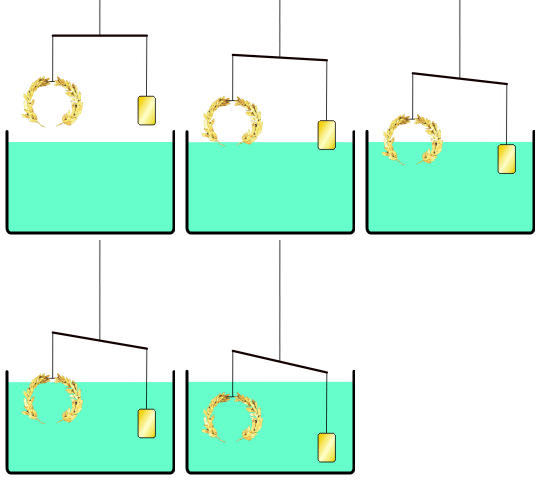 Yes, in banking. Nothing else, not even plastics. After all, plastics are related to production, commerce and based on science, which has completed its evolution (see, Republicans have no aversion to using the word "evolution") when Archimedes shouted "Eureka!" Afterwards, what ever the "scientists" had put forth were just theories. Once we can tell the difference of gold from silver, what more do we need to know?
Our great nation was founded by principled people who would not stomach other people's tolerance of other religions or customs, and became the very people not tolerated; therefore, we are to carry on our great tradition of intolerance into 21st century, be it other science, knowledge or common sense, as long as it does not conform to my world view.
Yes, banking. Not politics. We can buy politicians.
Yes, banking. Not science. Scientists we ridicule.
Yes, banking. Not manufacture. Labors we exploit.
Yes, banking, even if you have doubt about your abilities or affinities. Sage from China said that "Dragons beget dragons; phoenix beget phoenix; while mice can dig holes since their births", therefore, as long as you are from families of rich, you'll succeed as bankers, who will rule.
Wednesday, August 24, 2011
Pope, Economy and Spirituality

Pope Benedict made a very important speech during his recent visit to Spain. Yahoo via Associated Press reported that:
As he arrived, Benedict reached out to all young people, saying he understood the desperation many felt because of today's economic uncertainties.Indeed.
"The economy doesn't function with market self-regulation, but needs an ethical rationale to work for mankind," he told reporters traveling aboard the papal plane. "Man must be at the center of the economy, and the economy cannot be measured only by maximization of profit but rather according to the common good."
As manifested in the recent bulletin train crash in China, development for development's sake is a dead end. In the end, we must recognize that all the development and economic growth should geared at improving the living standard of people collectively, while protect the environment and other species who are increasingly at our mercy.
The increasing profits of corporations and the very few venture capitalists and fund managers, etc., if completely dissociated from the common good of the society, then something is definitely wrong.
This, unfortunately is happening right here, in the United States of America.
Growing up in the completely secular China, I have few appreciations of religion and even spirituality.
However, I start to appreciate some elements in these activities and thinking.
A completely secular society, such as China, can easily fall into the trap of materialism and the only god they should acknowledge, unfortunately is wealth. People there strive to enrich themselves but in materials only, and the betterment of themselves in spirit, intellect, character, in not scorned upon, at least are ignored.
US is a religious country. However, the brand of Christianity here is quite self-centered and not very charitable. It actually provides the rational for human kinds to exploit our environment recklessly for the profits of very few.
Instead of being a good steward of the earth, a member of community, we are morphing into a nation of cutthroats.
How I long for the time people truly valued the learning and knowledge and strove to be good, as embodied by the music by Bach, paintings by Botticelli, or sculptures by Michelangelo.
I do concede that I viewed those period through the lens of distance with glossed over the unpleasantness of those era, which could be just as corrupt as ours; however, it was a time people do believe in the importance of the betterment of their souls. We might not believe in souls, but we should try to improve ourselves, not just our accounting books.
Friday, August 12, 2011
Granting Voting and Other Human Rights to Corporations
People tend to criticize Republicans for not being compassionate. How wrong they are! The Republican are expanding their compassion much further than average human being could have imagined - they are making overture to grant human rights to corporations, including voting right for sure.
In January 2010, by citing First Amendment and granting free-speech right traditionally associated to human beings to the corporation, Supreme Court rejected limits on corporate spending on political campaigns [Washington Post]:
Below is the New York Times story on Mitt Romney's assertion during his Iowa campaign:
Therefore, I heartily endorse Romney's assertion, and demand on granting all human rights to corporations, and most important, the voting rights.
However, it is a bit tricky, logistically, to have corporations to vote and to stand in as candidates. But, we are a resourceful bunch; if we cannot agree on the details, we can always go back to the intentions of our Founding Fathers (not Mothers for sure).
Since our Founding Fathers' intentions were granting voting rights to property owners only, therefore, it makes absolute sense to grant the most monied entities - corporations - voting rights. For the unenlightened, there is a term called Originalism, or, Original Intent: Originalists think that the best way to interpret the Constitution is to determine how the Framers intended the Constitution to be interpreted. They look to several sources to determine this intent, including the contemporary writings of the framers, newspaper articles, the Federalist Papers, and the notes from the Constitutional Convention itself. [http://www.usconstitution.net]
I found some background information on History.org regarding the original intent of our founding fathers:
All the entitlements a human being enjoys should be extended to our dear corporation brothers and sisters, such as AIG, Lehmann Brothers, HP, Shell, Chevron, Ford, Apple, Google, Yahoo!
They ought to be able to collect social securities - if they are old enough, such as Coca Cola, etc. But do they have to retire, aka stop being actively churning out sugared cold drink? Maybe not. Many social security collectors continue to earn money on the side. Medicare and Medicaid too, if they need them.
But, naturally, they have to pay social security and medicare taxes. Well, so be it. We want to fair, don't we?
I would also propose that when a corporation breaks laws, causes deaths and engages in other mischeives, we ought to jail it - forbidding the corporation to practice in the term, and even impose death penalty upon it when its crime warrants such ultimate punishment - forbidding the corporate to engage in any business transactions for ever.
Also, we ought to regulate marriages of corporations, in case the corporates want to get married to each other are of same sex. Too bad too that we can no longer legally to deny the voting rights, or any other human rights, to the poor, the colored, or the homosexuals (excluding their marriage rights to the persons they love naturally) - therefore, we have to compromise a bit on our Founding Fathers' Intentions. This actually proves that we are not as rigid as our opponents charge us to be. We do compromise, only on our own terms.
All these endeavors can be done. Our country have the most resourceful lawyers if nothing else. And all the troubles are not wasted. How wonderful it would be if the governors in our countries are not the likes of Mr. Jerry Brown, or Mr. Mitt Romney, but Mr. Google or Mr. Fidelity! And why stop at governors' mansions. Corporations can occupy the White House and the chambers of Congress as well.
Our corporations deserve every dignity and entitlement a human being enjoys. Welcome, my corporation brothers and sisters.
Tomorrow, we are to vote together. I have several tens of thousands dollars and that's how many votes I shall have; while you, you ought to have millions upon millions, and billions upon billions votes.
Hurray! We are in a truly enlightened and democratic era. The sun rises, perhaps from the west?

In January 2010, by citing First Amendment and granting free-speech right traditionally associated to human beings to the corporation, Supreme Court rejected limits on corporate spending on political campaigns [Washington Post]:
A divided Supreme Court on Thursday swept aside decades of legislative restrictions on the role of corporations in political campaigns, ruling that companies can dip into their treasuries to spend as much as they want to support or oppose individual candidates.And now, the compassion from the Republic Party just keeps growing. Republican's presidential candidate, former Governor of Massachusetts Mitt Romney made news by publicly, unequivocally claiming that corporations are people. Bravo, Mitt!
In a 5 to 4 decision, the majority cast its ruling as a spirited defense of the First Amendment, concluding that corporations have the same rights as individuals when it comes to political speech. Corporations had been banned since 1947 from using their profits to endorse or oppose political candidates, a restriction that the justices ruled unconstitutional.
Below is the New York Times story on Mitt Romney's assertion during his Iowa campaign:
“We have to make sure that the promises we make in Social Security, Medicare and Medicaid are promises we can keep, and there are various ways of doing that,” Mr. Romney said. “One is, we can raise taxes on people.”Well, though I surely don't know where the money corporations take in go, I do think Romeny's compassion should not be brushed aside easily. After all, America is a born-again evangelical Christian nation, isn't it?
“Corporations!” the protesters shouted, suggesting that Mr. Romney, as president, should raise taxes on large businesses.
“Corporations are people, my friend,” Mr. Romney responded, as the hecklers shouted back, “No, they’re not!”
“Of course they are,” Mr. Romney said, chuckling slightly. “Everything corporations earn ultimately goes to people. Where do you think it goes?”
It was a telling, unscripted moment for Mr. Romney likely to be replayed on YouTube. In an instant, he seemed to humanize himself by pointedly squabbling with the group of hecklers, showing flashes of anger and defying his reputation as a sometimes stilted, unfeeling candidate.
But at the same time, he seemed to reinforce another image of himself: as an out-of-touch businessman who sees the world from the executive suite.
Therefore, I heartily endorse Romney's assertion, and demand on granting all human rights to corporations, and most important, the voting rights.
However, it is a bit tricky, logistically, to have corporations to vote and to stand in as candidates. But, we are a resourceful bunch; if we cannot agree on the details, we can always go back to the intentions of our Founding Fathers (not Mothers for sure).
Since our Founding Fathers' intentions were granting voting rights to property owners only, therefore, it makes absolute sense to grant the most monied entities - corporations - voting rights. For the unenlightened, there is a term called Originalism, or, Original Intent: Originalists think that the best way to interpret the Constitution is to determine how the Framers intended the Constitution to be interpreted. They look to several sources to determine this intent, including the contemporary writings of the framers, newspaper articles, the Federalist Papers, and the notes from the Constitutional Convention itself. [http://www.usconstitution.net]
I found some background information on History.org regarding the original intent of our founding fathers:
Typically, white, male property owners twenty-one or older could vote. Some colonists not only accepted these restrictions but also opposed broadening the franchise. Duke University professor Alexander Keyssar wrote in The Right to Vote: The Contested History of Democracy in the United States:Now, I believe that I just proved why it is so rightful and important to voting rights to the wealthiest entities, corporations. But why stop there? All the human rights!
At its birth, the United States was not a democratic nation—far from it. The very word "democracy" had pejorative overtones, summoning up images of disorder, government by the unfit, even mob rule. In practice, moreover, relatively few of the nation's inhabitants were able to participate in elections: among the excluded were most African Americans, Native Americans, women, men who had not attained their majority, and white males who did not own land.
John Adams, signer of the Declaration of Independence and later president, wrote in 1776 that no good could come from enfranchising more Americans:
Depend upon it, Sir, it is dangerous to open so fruitful a source of controversy and altercation as would be opened by attempting to alter the qualifications of voters; there will be no end to it. New claims will arise; women will demand the vote; lads from 12 to 21 will think their rights not enough attended to; and every man who has not a farthing, will demand an equal voice with any other, in all acts of state. It tends to confound and destroy all distinctions, and prostrate all ranks to one common level.
Property requirements were widespread. Some colonies required a voter to own a certain amount of land or land of a specified value. Others required personal property of a certain value, or payment of a certain amount of taxes. Examples from 1763 show the variety of these requirements. Delaware expected voters to own fifty acres of land or property worth £40. Rhode Island set the limit at land valued at £40 or worth an annual rent of £2. Connecticut required land worth an annual rent of £2 or livestock worth £40.
All the entitlements a human being enjoys should be extended to our dear corporation brothers and sisters, such as AIG, Lehmann Brothers, HP, Shell, Chevron, Ford, Apple, Google, Yahoo!
They ought to be able to collect social securities - if they are old enough, such as Coca Cola, etc. But do they have to retire, aka stop being actively churning out sugared cold drink? Maybe not. Many social security collectors continue to earn money on the side. Medicare and Medicaid too, if they need them.
But, naturally, they have to pay social security and medicare taxes. Well, so be it. We want to fair, don't we?
I would also propose that when a corporation breaks laws, causes deaths and engages in other mischeives, we ought to jail it - forbidding the corporation to practice in the term, and even impose death penalty upon it when its crime warrants such ultimate punishment - forbidding the corporate to engage in any business transactions for ever.
Also, we ought to regulate marriages of corporations, in case the corporates want to get married to each other are of same sex. Too bad too that we can no longer legally to deny the voting rights, or any other human rights, to the poor, the colored, or the homosexuals (excluding their marriage rights to the persons they love naturally) - therefore, we have to compromise a bit on our Founding Fathers' Intentions. This actually proves that we are not as rigid as our opponents charge us to be. We do compromise, only on our own terms.
All these endeavors can be done. Our country have the most resourceful lawyers if nothing else. And all the troubles are not wasted. How wonderful it would be if the governors in our countries are not the likes of Mr. Jerry Brown, or Mr. Mitt Romney, but Mr. Google or Mr. Fidelity! And why stop at governors' mansions. Corporations can occupy the White House and the chambers of Congress as well.
Our corporations deserve every dignity and entitlement a human being enjoys. Welcome, my corporation brothers and sisters.
Tomorrow, we are to vote together. I have several tens of thousands dollars and that's how many votes I shall have; while you, you ought to have millions upon millions, and billions upon billions votes.
Hurray! We are in a truly enlightened and democratic era. The sun rises, perhaps from the west?
Sisyphus © Matthew Felix Sun
Friday, August 5, 2011
Herakles, not Hamlet
The first term of the historic Obama presidency has passed its mid-point and now he is gearing up for his re-election. In those pass year, he has proved extremely ineffective as he was extremely eloquence in his campaign trips. In last few years, he surrendered again and again before many major battles and then came out declaring victories in the face of humiliating (to himself) and devastating (to us) defeats and squandered hand-own political edges.
He came to the presidency as the personification of great hope. Yet, now, it looks more like the greatest hype.
I have no doubt of his great intelligence, his noble intentions and his admirable even temper.
Yet, for all those virtues, if he cannot get his agendas, no, our agendas, accomplished, how good this president is he? Not much.
He has retreated again and again, arguing that all those defeats would be perfect debating points during his re-election campaign and he would deal his opponents a crushing defeat. That line of argument is not even hopeful; it's delusional.
Let us admit it, that Obama's presidency would not achieve what we deem good for the nation. He has served the historical purpose by smashing one racial ceiling; for that, we congratulate him and his voters, and thank them all.
Now, it's time for President Obama to accept the bitter reality. He is not up to the demands of the tough job, facing the opponents with utter contempt for average American people, America and him.
Perhaps, he can still prevail in the general election. But what's the purpose of that, if his second term is just as ineffective and disastrous as this one?
We need to have someone in the White House who can accomplish what we demand the president to accomplish. Let's find a warrior who would fight tooth and nail.
We need Herakles; not Hamlet.

Life Drawing © Matthew Felix Sun
He came to the presidency as the personification of great hope. Yet, now, it looks more like the greatest hype.
I have no doubt of his great intelligence, his noble intentions and his admirable even temper.
Yet, for all those virtues, if he cannot get his agendas, no, our agendas, accomplished, how good this president is he? Not much.
He has retreated again and again, arguing that all those defeats would be perfect debating points during his re-election campaign and he would deal his opponents a crushing defeat. That line of argument is not even hopeful; it's delusional.
Let us admit it, that Obama's presidency would not achieve what we deem good for the nation. He has served the historical purpose by smashing one racial ceiling; for that, we congratulate him and his voters, and thank them all.
Now, it's time for President Obama to accept the bitter reality. He is not up to the demands of the tough job, facing the opponents with utter contempt for average American people, America and him.
Perhaps, he can still prevail in the general election. But what's the purpose of that, if his second term is just as ineffective and disastrous as this one?
We need to have someone in the White House who can accomplish what we demand the president to accomplish. Let's find a warrior who would fight tooth and nail.
We need Herakles; not Hamlet.
Life Drawing © Matthew Felix Sun
Subscribe to:
Posts (Atom)

 Posts
Posts


